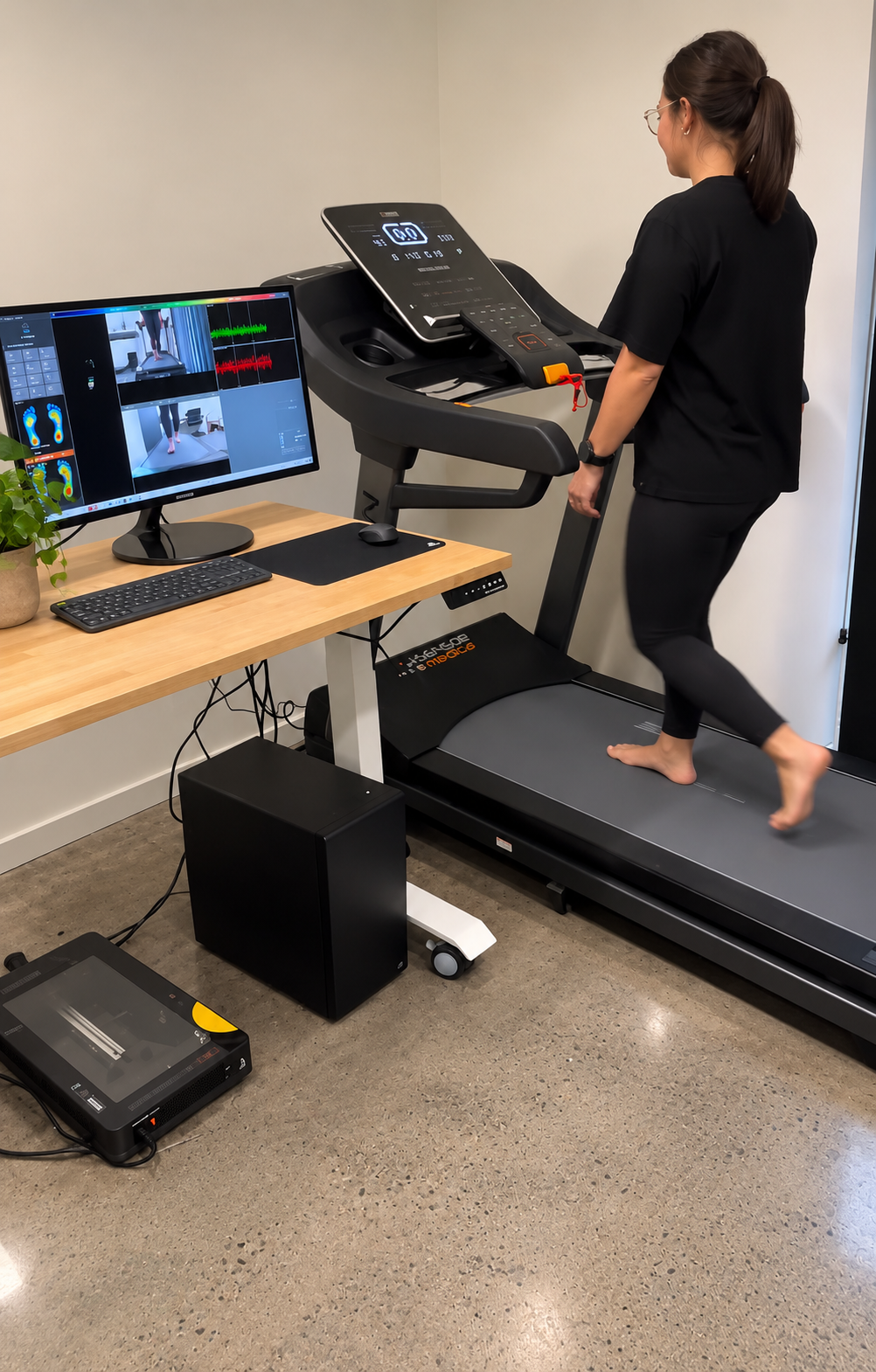
Podiatric Biomechanical & Gait Assessment
Understanding how you move to help you move better
Foot, ankle and lower limb pain can be frustrating, particularly when symptoms keep returning despite rest, footwear changes or adjustments to activity. A podiatric biomechanical and gait assessment looks beyond the painful area to understand how your feet, ankles and lower limbs work together, helping identify factors that may contribute to your symptoms and limit your performance.
During your assessment, we evaluate joint mobility, muscle strength, foot posture, balance and movement patterns during activities such as walking, running and single-leg movements. We use the Sensor Medica treadmill and plantar pressure analysis technology to record and analyse your walking or running patterns. This allows us to review and play back your movement, helping you visualise how pressure is distributed beneath your feet and understand movement patterns that may be influencing your pain. We also consider your footwear, injury history and activity demands to identify relevant limitations or areas of increased tissue loading. There is no single ideal way to walk or run; our focus is understanding what matters for your symptoms, function and goals.