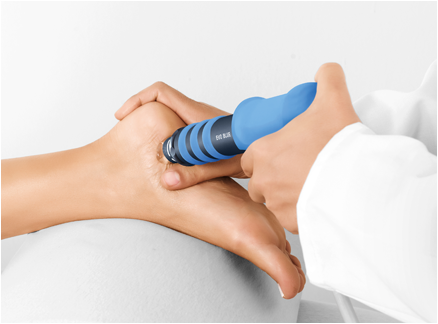
How shockwave therapy helps persistent plantar fasciitis
Plantar fasciitis, more accurately described as plantar fasciopathy in many chronic cases, involves persistent pain and changes in the plantar fascia where it attaches near the heel. Repeated loading from walking, standing, running and other activities can exceed the tissue's capacity to recover. Over time, the fascia may develop changes in its collagen structure and normal repair processes, contributing to ongoing pain, stiffness and reduced tolerance to activity.
Shockwave therapy aims to stimulate a new biological response within this stubborn tissue. Using the DolorClast system, controlled acoustic pressure waves are delivered to the affected area. This mechanical stimulus can activate cellular signalling pathways associated with tissue repair and remodelling, including processes involving fibroblasts, collagen production and local circulation. Researchers also believe shockwave therapy can influence pain signalling, helping reduce sensitivity in the affected area. Together, these effects may help the tissue adapt more effectively to loading and improve your ability to move comfortably.
The concept is sometimes described as reactivating the healing cascade. Rather than deliberately damaging the tissue, shockwave therapy provides a controlled mechanical stimulus that may encourage biological activity in an area where normal tissue adaptation has become less effective. Although the exact mechanisms are still being investigated, clinical evidence supports shockwave therapy as a useful treatment option for persistent plantar heel pain.
For someone experiencing months of heel pain, this may mean less discomfort during the first steps in the morning, improved tolerance to prolonged standing and walking, and a more comfortable progression back into exercise. Results develop gradually and vary between individuals, so shockwave therapy is best combined with appropriate plantar fascia and calf strengthening, load management and footwear advice to help maintain improvements over time.